Nobel Prize in Physics 2026 Explained: IceCube & Neutrinos
Nobel Prize in Physics 2026 Explained: IceCube & Neutrinos
Related videos

Why Is Earth So Small in a Universe Filled With Galaxies? | Michio Kaku
In this popular science video themed "Why Earth Is So Tiny in the Vast Universe," physicist Michio Kaku uses his signature vivid language to walk v...
5 Hours of Mind-Blowing Facts About the Solar System with Brian Cox
This is a five-hour deep dive into the cosmos, led by physicist Brian Cox, who takes viewers into a violent and chaotic solar-system laboratory. Gr...

Why America Is Facing Floods, Severe Storms, and Sudden Cold All at Once
The United States is experiencing a "weather rollercoaster": within a single week, temperatures have swung from record highs to an early snowfall, ...
The Unknown Story Behind One of the Most Important Discoveries in Physics – with Jim Al-Khalili
This presentation is hosted by physicist Jim Al-Khalili. He traces the true story behind a pivotal discovery in the history of modern physics—an ex...

Why Was Oxygen Once a Poison to Life? | 2K Prehistoric Documentary
Earth’s early atmosphere was completely different from today’s—oxygen was almost nonexistent, and for all life at the time, it was a deadly poison....

The Entire History of Earth in 1 Hour
This one-hour science documentary compresses Earth's 4.6-billion-year history into 60 minutes, presenting an epic跨时空 narrative at a rapid pace. Fro...
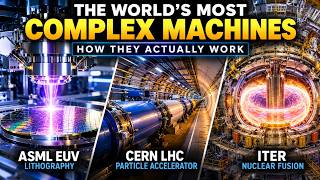
How the World's Most Complex Machines Actually Work | Engineering Explained
The total runtime is unknown, so plan your viewing time accordingly. This *Engineering Explained* series takes the most complex machines in human h...

Evolution: Brain Power | Full Documentary | NOVA | PBS
Video length: unknown. Using dolphins as our window into observation, this film traces the pivotal leaps in brain intelligence across billions of y...

What Is Quantum Physics | Science for Sleep
This is a science audio piece of unknown duration, produced by "Sleepy Scientist," focused on an introductory exploration of quantum physics. Quant...

2 Trillion Galaxies: A Century of Misconceptions | Unraveling the Universe
This is an in-depth science popularization piece about the history of how humanity's view of the universe was overturned. From the "100-year mistak...

Something Massive Just Changed in the Pacific… America Wasn't Ready for This
Total runtime is approximately 15 minutes, so we recommend planning your viewing time accordingly. This video takes an in-depth look at an astonish...

What if Monsters were Real? - Evolved Fiction Documentary 2
This is a science documentary continuing the "Evolutionary Fiction" series, placing mythical beasts within a real evolutionary framework for rigoro...